viticultores Ribera del Duero
Caring for the Future. 7th Meeting of Ribera del Duero vinegrowers
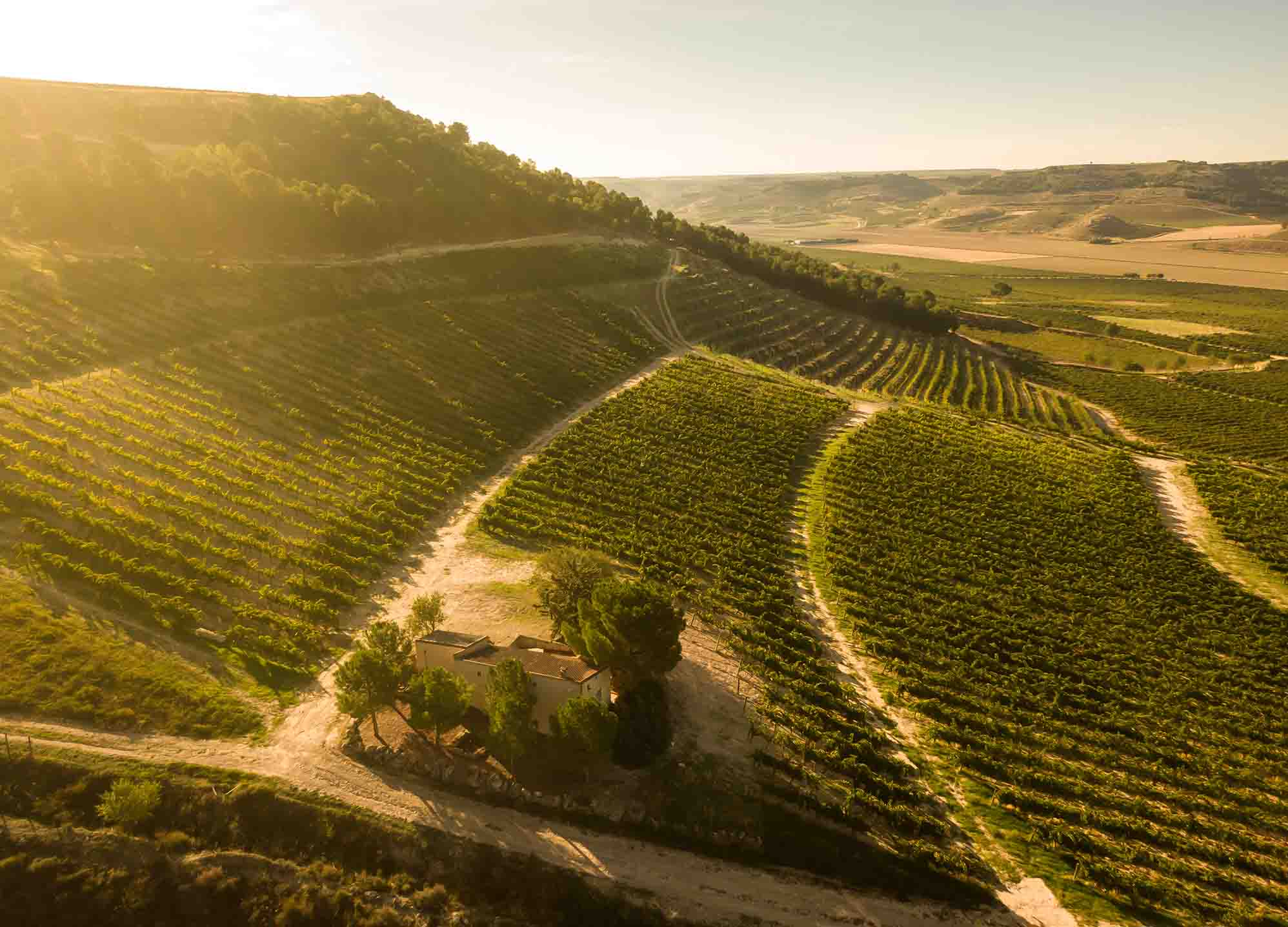
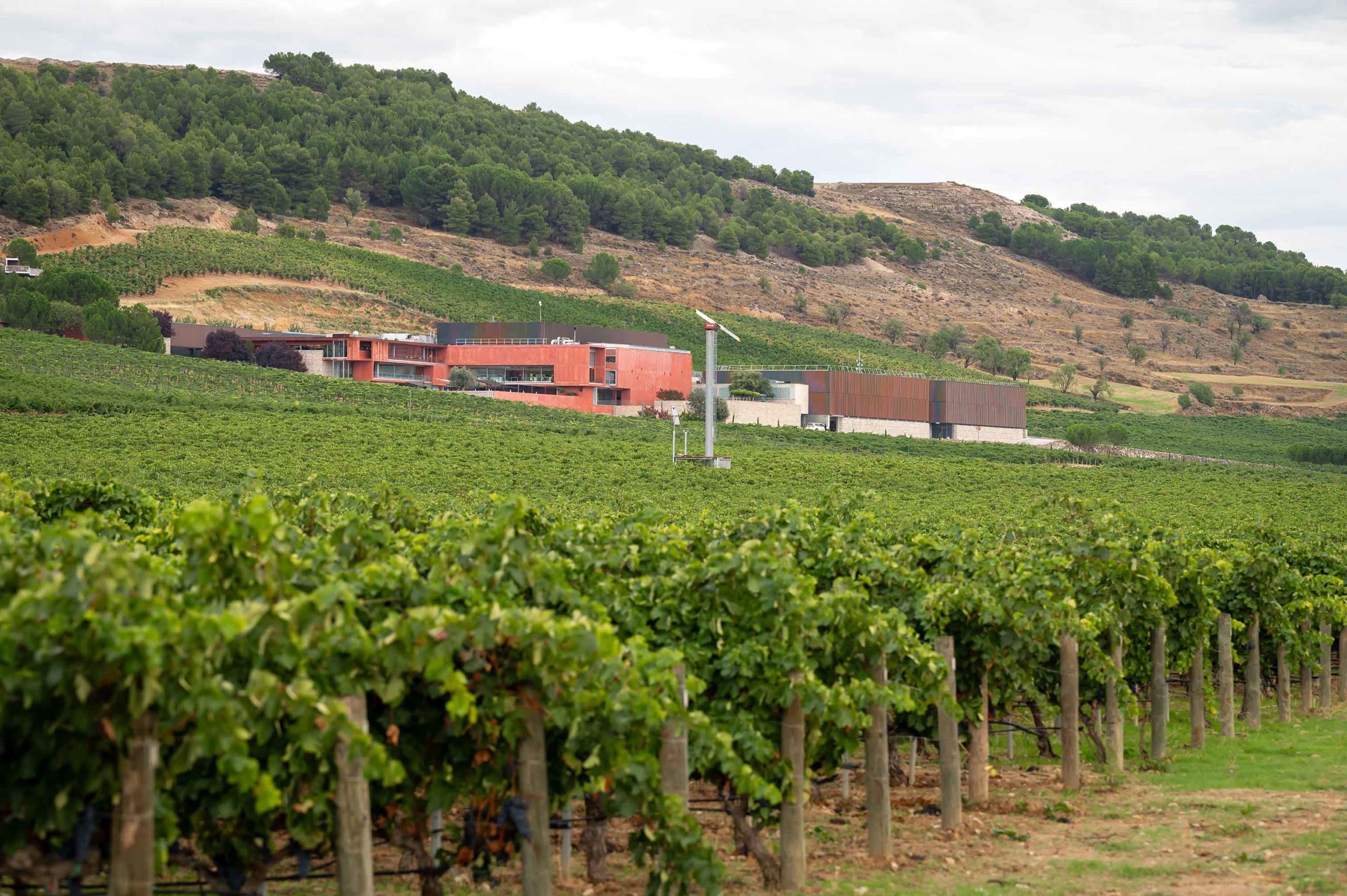
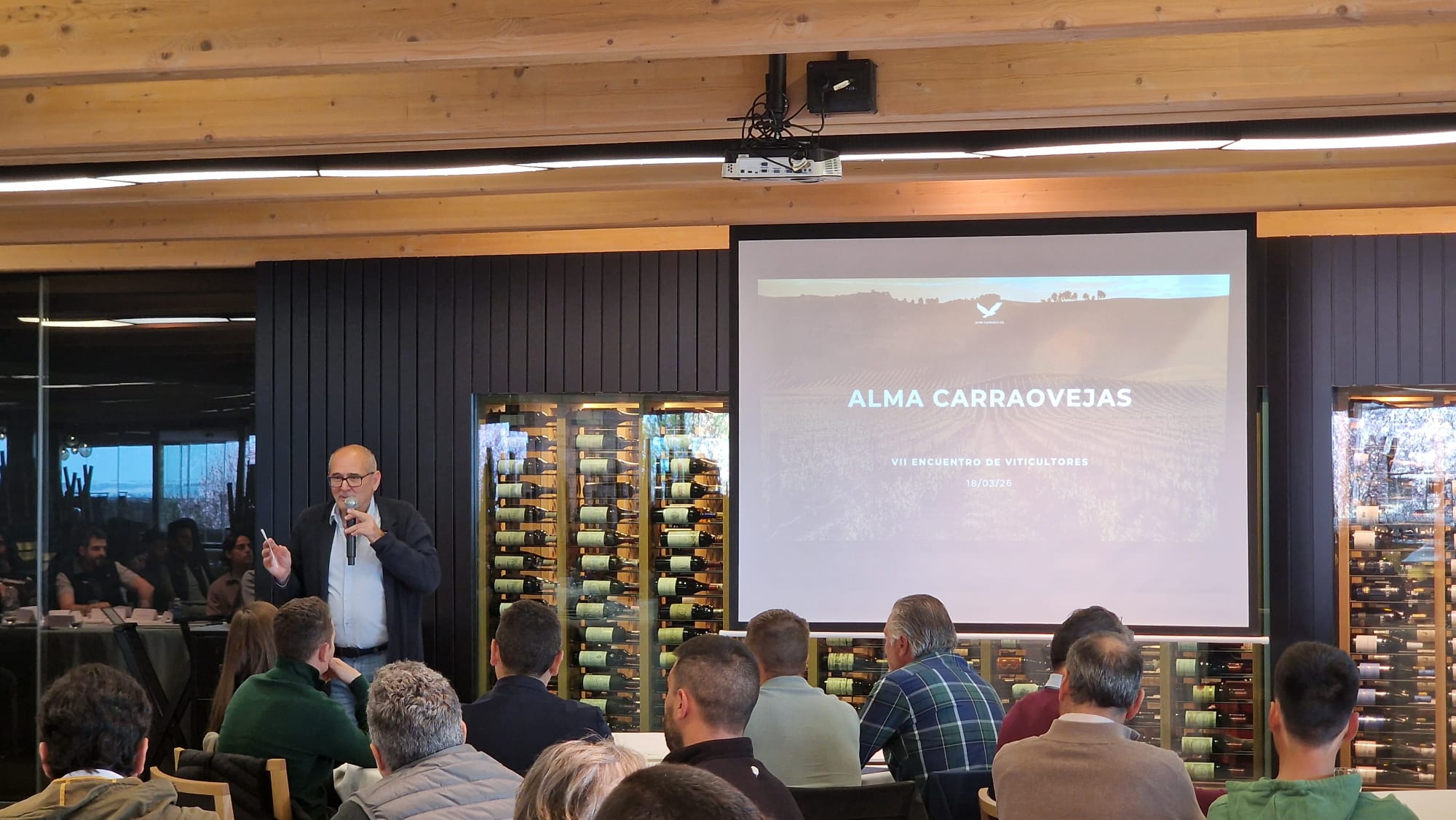
On March 18, we held the seventh gathering of Ribera del Duero vinegrowers at Pago de Carraovejas. This event invites us to come together just before the vines begin to bud, to understand where we’re headed. And to involve all our grape suppliers at Pago de Carraovejas. This year, in particular, we invited some vinegrowers from Rioja, suppliers for our Aiurri project in Rioja Alavesa.
Year after year, this event has established itself as a gathering place for vinegrowers from the Ribera del Duero and leading figures in fields such as soil science, climatology, and oenology, to name a few examples from recent years. At Pago de Carraovejas, approximately 20% of the grapes come from vinegrowers in different areas of the Designation of Origin, with whom we share a philosophy based on respect for the environment and a commitment to high standards throughout the entire growing cycle.
The Challenges facing vinegrowers in Ribera del Duero
The wine industry is facing a challenging time. And that’s not just a feeling—it’s a reality. Pedro Ballesteros MW was the one to put it into words. He reviewed, one by one, the major challenges facing the sector today: climate, markets, and consumption. As a perennial crop, the vineyard is particularly vulnerable to an increasingly unstable climate. Added to this is an uncertain international context—tariffs, conflicts, the slowdown of key economies—and a profound shift in consumer habits, with younger generations relating to alcohol in a different way.
Despite the prevailing pessimism in the wine sector stemming from such rhetoric, Pedro Ballesteros emphasized the optimism and opportunities emerging at this time, such as new trade agreements, greater differentiation from other consumer products, and the education our young people receive today.
“We in the wine industry are different,” he said. And in that difference lies an opportunity. Unlike other products more closely tied to branding, wine remains a realm of discovery. Those who drink wine don’t stand still: they taste, compare, and seek out new experiences. And that compels us—and allows us—to do things better.
He also spoke about technology, but not out of fear. Rather, as a tool for progress, for making better decisions. “The limiting factor in the vineyard is the cost of labor,” which is why new tools can “shift viticulture away from physical labor and toward intellectual work.” And he offered another key insight: “Wine is worth nothing until it’s sold abroad.” A direct reminder that wine needs to reach the market. And that the vinegrowers needs the winery to showcase their grapes and their region.
In this regard, he explained the importance of creating more Spanish brands that, with production not overly limited, position the country’s wines among the best in the world. The “50-50-50” rule already followed by the U.S., Italy, and, of course, France: more than 50 wineries, producing more than 50,000 bottles at a retail price of over 50 euros.
The vinegrowers of Ribera del Duero who are part of Alma Carraovejas
The rest of the morning focused on Alma Carraovejas. From within the company, Paulo Cardoso shared Alma Carraovejas’s results. It was a year of growth, with record revenue, a boost in exports, and strong overall performance across all projects. But beyond the numbers, his message was clear: there are reasons for optimism. And that optimism has a lot to do with the work that begins in the vineyard.
Pedro Ruiz Aragoneses closed the session. In a brief speech that served as a summary of the morning, he reminded us that we’ve been hearing for years that everything is going to come to an end. What with COVID, the war in Ukraine, and international tensions. And yet, here we are. The world hasn’t stopped. And neither has wine. Even if there’s fear about what may lie ahead, hope must always prevail.
In that context, he sent a direct message to the vinegrowers: “We need you.”
The morning concluded with a meal prepared by Ambivium, featuring a tasting of various local products crafted by the restaurant’s staff. This special event marks the beginning of the 2026 vintage.